

China-US Reciprocal Tariff Reduction List Takes Effect — How Can Cross-border Sellers Seize the Window?
The China-US reciprocal tariff reduction list has officially taken effect, with both sides lowering additional tariffs on a batch of imported goods. Consumer categories such as toys, small appliances, and baby products appear on the list. This is one of the most-watched policy changes in the China-US trade chain this year, and the news has been flooding sellers' feeds.
For cross-border sellers, the significance of the list taking effect lies not in the document itself, but in that it directly changes the cost structure: tariff spending declines, landed cost loosens accordingly, and the pricing space previously squeezed by tax burdens is reopened. How big the dividend is and how long it can be enjoyed depends on how sellers use it.
The window will not stay open forever. We break this article into three parts: what's on the list, how to calculate the cost, and how to arrange the shipping rhythm, followed by transport recommendations for the U.S. line.
01
Reciprocal Tariff Reduction List Takes Effect Consumer Goods Are the Focus
Judging from the published list, the categories covered by this round of tariff reductions are mainly consumer goods, with toys, small appliances, baby products, and others included, covering both finished products and some parts and semi-finished products. This differs significantly from previous rounds that focused on industrial products and raw materials, indicating that bilateral negotiations are tilting toward consumer categories, a signal worth noting.
It is worth noting that the list is implemented in batches, and the effective times of different categories are not entirely consistent. This means sellers cannot draw conclusions from a single announcement, but must check the customs codes of their products item by item and confirm three things: whether they are on the list, which tariff tier applies, and when it takes effect.
For cross-border sellers, the first step is to compare their in-sale SKUs with the list one by one and filter out the truly benefiting categories; the second step is how to use this dividend. Rushing to adjust prices or arrange stocking without clearly verifying the categories can easily miscalculate the policy dividend.

02
How Is the Tariff Reduction Dividend Allocated Between Cost and Pricing?
After the tariff reduction, the first thing that changes is landed cost. The cross-border cost of a product usually consists of several parts — procurement price, domestic logistics, international freight, tariffs, and platform commissions — among which tariffs are one of the more elastic parts. A lower tax rate means thicker margins at the same price, or room to lower prices at the same margin.
How to use this space depends on the seller's business situation. New products that are climbing rankings and grabbing market share can pass the dividend to pricing in exchange for conversion rate and sales growth; already-stable profit SKUs are better suited to keeping the dividend in margins to hedge against exchange-rate fluctuations and rising advertising costs. There is no better or worse between the two approaches — the key is to calculate clearly.
Sellers are advised to recalculate the cost table during the window: list the landed costs before and after the tariff reduction separately, then measure the net profit levels of the two strategies — price concession versus margin protection — against current selling price, advertising spend, and return rate. Adjusting prices only after calculating clearly is far safer than adjusting by feel. At the same time, watch competitors' price movements; if a price concession within the window is not competitive, the dividend will still slip away.
03
How to Arrange Stocking and Logistics Rhythm During the Window
The policy window is limited, so the stocking and logistics rhythm needs to be rearranged. Based on market reactions during previous tariff adjustment rounds, the early stage of a window often brings a wave of concentrated shipping, with first-leg space and last-mile delivery resources becoming tight in stages, and freight rates possibly rising accordingly.
From the shipping chain perspective, first-leg transport, destination-port customs clearance, and last-mile delivery each need buffer room: first-leg should avoid the shipping peak around one week before and after the effective date, customs clearance documents should be prepared in advance according to special-cargo standards, and last-mile should reserve buffer days for peak-season delivery congestion.
For categories covered by the list, a three-step approach is recommended:
- ✓ Confirm the benefiting SKUs against the list and lock in the stocking list and quantity
- ✓ Recalculate margins based on post-reduction costs and determine pricing and replenishment strategies
- ✓ Reserve logistics timeliness buffer and avoid the concentrated shipping peak
At the same time, special-cargo sellers need an extra layer of caution: categories such as toys (guns), battery products, liquids and pastes, and cosmetics are subject to transport compliance constraints alongside tariff changes, and not all channels can carry them. Finding a logistics channel that can stably carry special cargo matters more than simply comparing prices.
The result of a wrong rhythm is usually one of two: goods arriving only before the tax rate takes effect without capturing the dividend, or shipping concentrated around the effective date with both timeliness and freight rates spinning out of control. Planning batches in advance costs far less than remedying after the fact.

04
Huanhan U.S. Special-Cargo Line Fits Window-Period Shipping
For U.S.-line shipping needs after this round of list implementation, Huanhan Express's U.S. special-cargo line can carry special-cargo categories such as toys, battery products, cosmetics, and liquids and pastes, covering the entire first-leg transport, customs clearance, and last-mile delivery process.
For sellers planning window-period shipping, they can first confirm with Huanhan the carrier solutions and timeliness arrangements for their categories, then determine stocking batches and shipping rhythm, avoiding missing the policy window due to channel issues.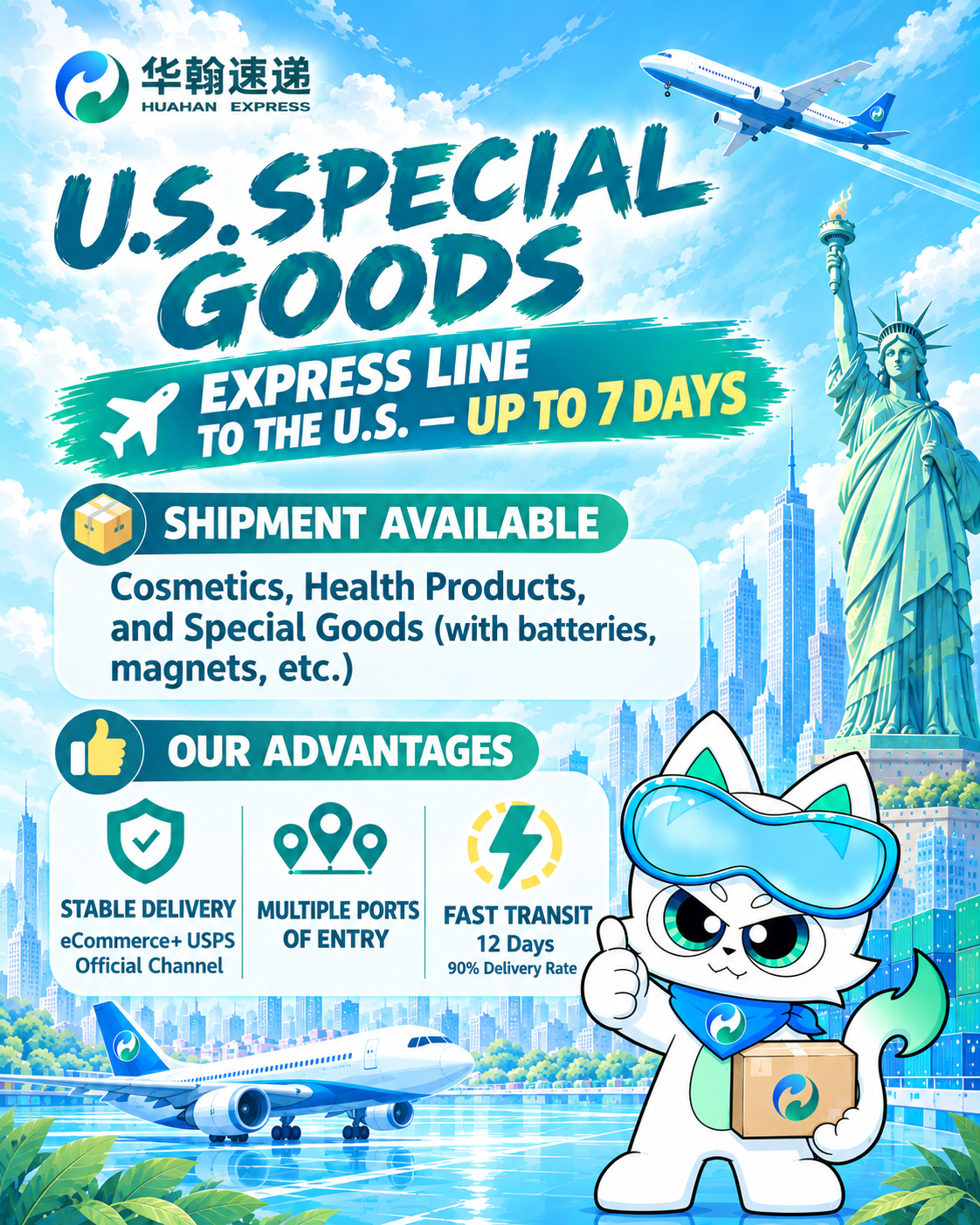

Established in 2008, Huahan Express is a comprehensive service provider specializing in cross-border e-commerce logistics of special goods, committed to becoming a leading international logistics brand for special cargo.
Key markets:
Americas: The United States, Mexico and other countries
Europe: Countries such as the United Kingdom, Germany, Spain, France, Belgium, Portugal, the Netherlands, Italy, etc;
Oceania: Australia.
Available product categories:
Dietary supplements / capsules / knives / lighters / cosmetics / perfume / creams / liquids / powders / car care products / battery-only / battery-powered and magnetic products / power banks / standalone batteries / toy guns/ outdoor tools / adult products / food and more than 1,000 types of special cargo, as well as general cargo.


